Why pots work so well for roses
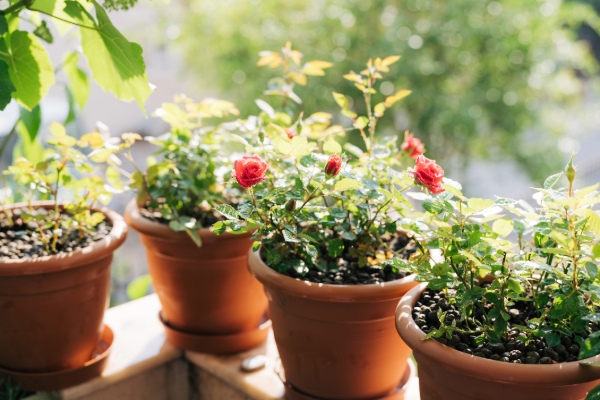
Containers give you full control over the growing medium, which is handy if your garden soil is sandy or poor quality. They can also be moved if a spot turns out to get too much or too little sun. Compact and dwarf varieties are especially well suited to pots, since their mature size stays easy to manage, and it's simpler to spot pests or disease on a single plant than across a whole garden bed. Roses generally do best in full sun with fertile, well-drained conditions.
Choosing the right pot
Pick a container that suits the mature size of your chosen rose, since larger bush roses need considerably more root room than compact or miniature types. Whatever material you choose, drainage is non-negotiable, and potted roses dry out faster than those in the ground, so a bit of extra volume in the pot goes a long way.
- Choose a pot with adequate drainage holes.
- Go bigger rather than smaller where you can, since a larger pot holds more root space and won't dry out as quickly.
- Raise the pot slightly on pot feet or bricks so excess water can drain away freely.
Picking varieties for hot, dry conditions
Not every rose copes equally well with a long, hot, dry summer, so it pays to choose a variety suited to the climate. Look for compact, repeat-flowering types bred for container growing, and ask your local nursery which varieties and rootstocks will perform the best.
- Iceberg is a popular floribunda with clusters of white flowers, valued for its repeat flowering, disease resistance and reliability as a hedging and border variety.
- Bonica produces clusters of medium-pink flowers on a relatively low, bushy plant, which suits gardens with limited space.
- Flower Carpet roses are low, spreading varieties valued for their disease resistance and long flowering period, making them well suited to large containers.
In hot, dry climates it's also worth asking whether a rose is grown on Fortuniana rootstock, which some rose societies recommend for tougher conditions. Rather than picking a rose purely because it's labelled drought tolerant, weigh up its mature size, growth habit and the sun and water you can realistically provide. Larger roses generally need larger pots and closer attention to watering.
Planting your rose
- Add enough potting mix so the rose sits at the correct height, with room for the roots to spread.
- Gently loosen any tightly packed roots and centre the rose in the pot.
- Backfill with potting mix, leaving a couple of centimetres below the rim so water doesn't spill over when you irrigate.
- If the rose is grafted, make sure the graft union sits above the potting mix rather than buried beneath it.
- Water thoroughly straight after planting to settle the mix and remove large air pockets.
Ongoing care
Potted roses dry out faster than roses in the ground, particularly during hot summer weather, so it's worth checking the moisture in the pot regularly rather than sticking to a fixed schedule. Water thoroughly once the mix starts to dry, and be prepared to water more often, sometimes daily, during extended hot or windy spells.
- Feed with a rose fertiliser according to the product's directions, particularly during active growth and flowering, since roses are relatively heavy feeders at this time.
- Deadhead spent blooms regularly to encourage further flowering.
- Top up mulch around the base of the plant, keeping it clear of the main stem, to reduce evaporation and keep the roots cooler.
- Refresh some of the potting mix periodically and repot into a larger container once the rose has outgrown its pot or the mix has broken down.
- Prune repeat-flowering roses in mid to late winter, removing dead, damaged, weak or crossing growth and keeping an open shape. Roses that flower only once in spring should be pruned after flowering rather than in winter.
With a well-chosen pot, a suitable variety and some regular attention, roses can thrive in even the smallest outdoor space and reward you with flowers for months at a time.
Sources:
ABC Gardening Australia
Rose Society of Western Australia