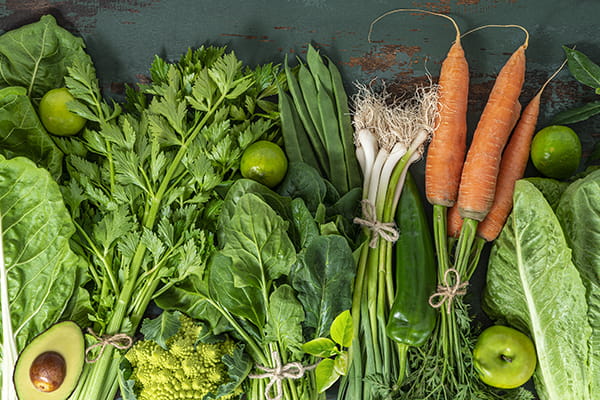
Leafy greens (e.g. lettuce, spinach, rocket, kale)
- Keep these dry and cool.
- Store them in the fridge, ideally in the crisper drawer.
- Keep lettuce whole for as long as possible, as it lasts longer that way.
- Use paper towel to absorb moisture and don't wash until just before use.
Celery
Wrap in kitchen paper, then aluminium foil, and store in the fridge. This helps it stay crisp instead of going limp.
Carrots
Store in the fridge, preferably in the crisper drawer. If they come with leafy tops, remove them as they can draw moisture out. Keep carrots in a bag or container so they don't dry out.
Broccoli and cauliflower
Store in the fridge with some airflow. Keep them loose or in a breathable bag rather than sealed containers, which can trap moisture. Use within a few days for best quality.
Capsicum (bell peppers)
Store in the fridge, unwashed and dry. Keep them whole where possible. Once cut, store in a sealed container and use quickly.
Cucumbers
Store in the fridge, ideally in the crisper drawer. Keep them dry and use within a few days, as they can soften fairly quickly.
Zucchini (courgette)
Store in the fridge, unwashed, in a breathable bag or loose in the crisper.
Eggplant (aubergine)
Best used within a few days. Store at room temperature if you'll use it soon, otherwise refrigerate for short-term storage only.
Tomatoes
- Store at room temperature if they're still firm and not fully ripe.
- Keep them out of direct sunlight and let them ripen naturally.
- Once ripe, or if they're starting to soften, move them to the fridge.
- Bring them back to room temperature before eating for better flavour.
Potatoes
- Store in a cool, dark and dry place, not the fridge.
- Use a basket or container that allows airflow and keep them away from onions.
- Light and moisture cause sprouting and spoilage.
Onions
Store in a cool, dark, dry place with some airflow. Keep them separate from potatoes to prevent faster sprouting.
Garlic
Store in a cool, dry place with good airflow. Keep whole bulbs intact and don't refrigerate.
Mushrooms
- Store in a paper bag in the fridge so they can breathe.
- Avoid plastic, which traps moisture.
- Don't wash before storing.
- Clean them just before use by wiping with a damp cloth or brushing off dirt.
Green beans and snow peas
Store in the fridge, keep dry and use within a few days.
Corn
Store in the fridge with the husk on and use as soon as possible for the best flavour.
Herbs (parsley, coriander, basil, etc.)
Most herbs last longer kept upright with the stalks in a small amount of water.
- Trim the ends slightly, place in a jar and keep in the fridge (except basil, which prefers room temperature).
- Change the water every couple of days.
Spring onions and leeks
Store in the fridge.
Asparagus
Store in the fridge and keep the stalks whole - trim the ends just before cooking.
Pumpkin and squash
Store whole in a cool, dry place. Once cut, keep in the fridge, covered, and use within a few days.
Sweet potatoes
Store in a cool, dark, dry place (but not in the fridge).
Freezing
If you won't use vegetables in time, freeze them. Blanching before freezing helps maintain texture and flavour, though some vegetables can be frozen raw if needed.
Reviving wilted vegetables
Leafy greens and herbs can often be revived by soaking them in cold water with ice for 10–15 minutes.
Keep fruit and vegetables separate
Some fruits release gases that speed up ripening. Keep them away from vegetables to prevent early spoilage.
Buy whole where possible
And finally, always buy whole vegetables rather than cut and pre-prepared in a bag, as they will last longer (and cost less per kilo).