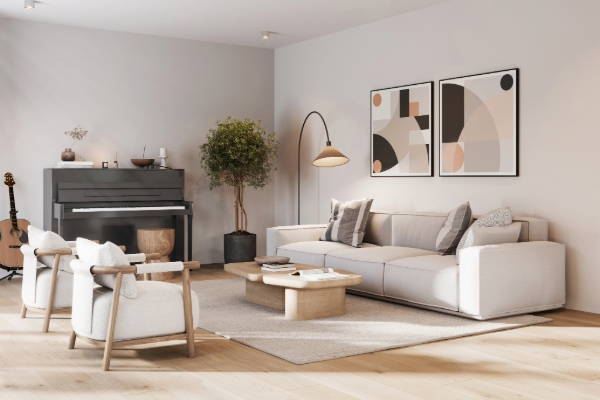
It's all about working with colour, light and a few subtle optical tricks that painters have been using for years.
Stick with lighter shades
Light colours reflect more light, which helps a room feel open rather than boxed in. Soft whites, pale greys, warm creams and gentle pastels are all great options for smaller spaces. You don't have to stick to plain white either - even a hint of colour can add warmth without making the room feel closed in. If you love colour, choose a lighter version of your favourite shade rather than going bold and dark.
Use the same colour throughout
Painting walls, trims and even doors in the same or very similar colours can blur visual boundaries. When there are fewer strong contrast lines, the eye moves smoothly around the room, making it feel more spacious. This works especially well in small living areas or narrow hallways where lots of colour changes can make the space feel chopped up.
Make the ceiling work harder
A ceiling painted a shade lighter than the walls can lift the entire room. It creates the illusion of height, drawing the eye upward rather than letting it settle at wall level. If your ceiling is already white, keeping it fresh and bright can make a noticeable difference. For a slightly more modern look, a very pale version of your wall colour on the ceiling can still give that lifted effect without feeling stark.
Try vertical or horizontal tricks
Paint can play with perspective in clever ways. Vertical stripes or subtle colour variations can make low ceilings appear higher, while horizontal stripes can widen a narrow room. These don't have to be bold or dramatic - even a soft tonal stripe can gently guide the eye and change how the space feels. Another option is painting a feature panel that draws attention upward or across the room.
Keep feature walls subtle
Feature walls can still work in small rooms, but the key is restraint. Dark or intense colours on one wall can sometimes make a room feel shorter or narrower. If you want a feature wall, choose a lighter tone or a soft texture rather than a deep, heavy colour. Positioning also matters - a feature wall at the far end of a long room can help balance the space.
Use gloss and sheen wisely
Paint finishes affect how light moves around a room. Low-sheen or satin finishes on walls reflect more light than flat matt paints, helping the space feel brighter. Semi-gloss or gloss on trims, doors and window frames can also bounce light around and add depth without overwhelming the room. It's a small detail that can quietly make a big difference.
Match paint to natural light
Take note of how much natural light a room gets. Rooms with limited sunlight benefit from warmer light shades that stop the space feeling dull. Bright rooms can handle cooler tones that keep things fresh and open. Testing paint samples at different times of day can help you choose a colour that works with the light rather than against it.
Keep things simple
Too many colours can visually shrink a space. A simple palette with one main wall colour and a couple of complementary accents feels calmer. When paint colours flow easily into adjoining rooms, your home feels larger, not just room by room.
With the right paint choices, even the smallest room can feel welcoming and spacious. It's an easy, affordable way to transform how your home looks and feels, without knocking down a single wall.