Some used lightbulbs contain hazardous materials, while others can be recycled to recover valuable resources.
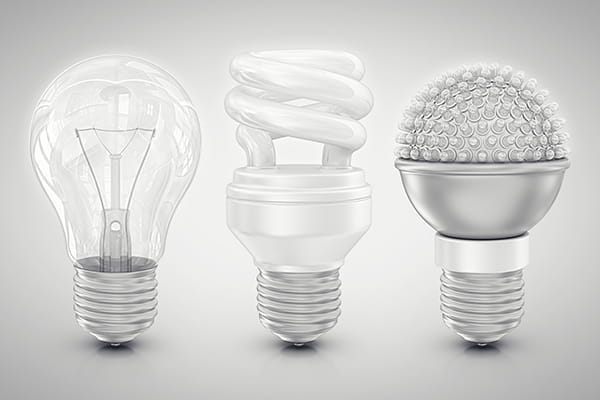
Compact fluorescent lamps (CFLs) and fluorescent tubes
These bulbs are energy efficient but contain small amounts of mercury, which makes them hazardous if they end up in landfill. They must never go in household bins. Instead, they can be dropped off at a Household Hazardous Waste (HHW) facility, where they’ll be safely collected and recycled. The program allows householders to drop off up to 20 kilograms or litres of items at no charge.
Incandescent and halogen bulbs
These older-style bulbs don’t contain mercury, so they are less of a risk. However, they can’t go in kerbside recycling because the materials are unsuitable for processing. If no recycling option is available, the advice is to wrap them carefully to avoid breakage and place them in your general waste bin.
LED bulbs
LEDs are the most efficient option and don’t contain mercury, but they do have valuable materials inside, including metals and semiconductors. They should be taken to either a Household Hazardous Waste facility or an e-waste drop-off point so these materials can be recovered and reused rather than going to landfill. There are all sorts of places to recycle your used lightbulbs, from shopping centres, to libraries, so visit the Recycle Right website to find your nearest option.
What happens after drop-off
Once bulbs are collected, they are sent to specialist recycling facilities. CFLs and fluorescent tubes are processed so the mercury can be safely captured and stored, while the glass, aluminium and other metals are separated for recycling. LEDs and halogen bulbs can also be dismantled, with useful materials recovered and kept in circulation.
Why it matters
Recycling lightbulbs prevents mercury from entering soil and waterways, protects waste workers, and gives a second life to valuable materials.
Sources:
Waste Authority WA
Watch Your Waste WA
Recycle Right WA