There's no one 'right' way to do it
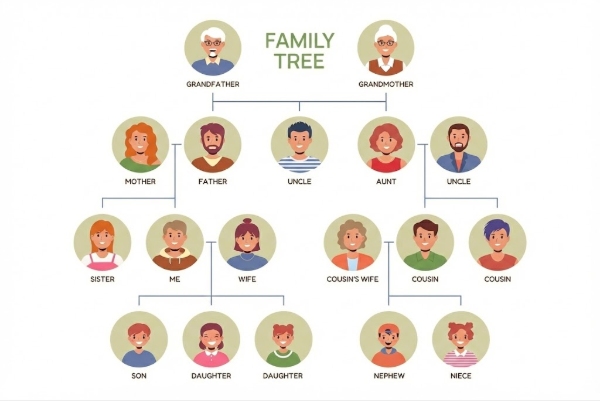
Most family trees start with the oldest generation at the top and the youngest at the bottom, but there are no set rules. You can flip it around and start with the youngest and keep it as simple or as detailed as you like. It's your family story, and your family tree should suit the way your family works.
How far back should you go?
If your kids are younger, it often helps to start with who they already know, such as parents, siblings, and grandparents. If your kids are older, you might like to go further back to great grandparents and beyond, depending on the information you have (and how many names you can fit on the page!).
Remember that family isn't always biological
One of the nicest things about creating a family tree is that you can choose what 'family' means for you. You might include step-parents, half-siblings, foster family, close family friends, or other important people. Families can look lots of different ways, and every version is valid.
For many children, learning about their family history can help them feel more grounded and secure, because it shows them that they're part of something bigger. Some research also suggests that children who know more about their family story may have higher self-esteem and stronger emotional wellbeing.
Even if you don't have much information about earlier generations, simply talking about the people your child knows and loves is meaningful.
Use photos to bring the tree to life
Looking through photos is a great way to make a family tree feel more real and personal. As you go, take some time to share the stories behind the images.
Include as much detail as you can, such as who the people are, when and where the photo was taken, and any memories you can remember. You could also talk about what life was like when they were growing up, what they did for work, what they enjoyed, and what was different back then.
You could even explain how photos were taken before the invention of mobile phones – and why there aren't hundreds of photos of everyone doing everyday things!
Extra details you might like to add
- Full names (including maiden names, if you have them)
- Nicknames people were known by
- Birthdays (and dates of passing, if appropriate)
- Places people were born or lived
- Languages spoken or cultural background
- Jobs, hobbies, or special talents
- Family traditions or sayings
- Interesting facts (for example, who was the best cook or who told the worst jokes!)
Turn it into a fun family project
If your child is interested, you can turn the family tree into a simple family history project. They might like to interview grandparents or older relatives, record stories, or write a short "about me" section for each person.
Family tree format ideas
- Make a drawing of an actual tree and add photos with names underneath.
- On a large piece of paper, get your kids to make colourful handprints and use each one to write the details of a family member – with or without a photo.
- Put photos in a large frame and write the names of each person underneath. Visual clues can be a big help when learning who is who.
- Create a family tree photo wall. Gather family photos, place them in frames and hang them in generation order.
- For a more informal option, use a cork board and colourful push pins. Pin family photos in place and add names underneath.
- Create a circular family tree. Start with your children's names in the centre, then draw a circle around that with parents' names – then grandparents, great grandparents, and so on with each new ring.
- Make a scrapbook-style family tree using photos, stickers, and short notes.
- Create a digital family tree, which can be handy if your family is spread across different states or countries and you'd like everyone to see it.
- If you'd rather keep it simple, there are also plenty of free family tree templates you can download online.
A family tree doesn't have to be perfect
However you choose to do it, a family tree doesn't need to be perfect to be meaningful. Even a simple version can help children feel connected, spark curiosity, and remind them that they're part of a much bigger story.