What causes skin damage?
Ultraviolet (UV) radiation from the sun is the main cause of sun damage. Unlike sunlight and heat, UV radiation can't be seen or felt, so you can't always tell when you're being exposed to it.
UV radiation can damage skin cells, and the effects of exposure accumulate over time. Repeated exposure can contribute to premature ageing, including wrinkles and changes in skin texture, as well as increasing the risk of skin cancers.
UV levels can also be high when the weather is cool or cloudy, so temperature isn't a reliable guide to how much UV you're being exposed to.
Who is more at risk?
Some people are more likely to experience sun damage and develop skin cancer. Risk factors include:
- Fair skin that burns easily and tans poorly
- Fair or red hair and light-coloured eyes
- Lots of freckles or moles
- A personal or family history of skin cancer
- A history of sunburn, particularly during childhood
- Spending childhood in Australia or another country with high UV levels
- Spending a lot of time in the sun through work or leisure activities
Having one or more risk factors doesn't mean you will develop skin cancer, but it is a good reason to take extra care with sun protection.
Sunburn
Sunburn is an obvious sign of UV damage, but you don't have to burn for your skin to be affected. UV radiation can damage skin cells without causing visible redness or discomfort.
Repeated sunburn, particularly during childhood and adolescence, is associated with an increased risk of melanoma. Long-term, cumulative exposure to UV radiation is also an important risk factor for other types of skin cancer.
The best approach is to avoid getting sunburnt in the first place and protect your skin whenever UV levels are high.
Tanning
A suntan is your skin's response to UV exposure and is a sign that UV radiation has caused a change in the skin. There is no such thing as a safe or healthy tan from UV radiation.
Too much UV exposure can also accelerate skin ageing, contributing to wrinkles and changes in the skin's texture and appearance.
If you like the look of a tan, a fake or cosmetic tan doesn't expose your skin to UV radiation and is a safer alternative to tanning in the sun or using a solarium.
Solariums
Solariums, also known as sunbeds or tanning beds, expose the skin to artificial UV radiation. Using them increases the risk of skin cancer and can also contribute to premature skin ageing and eye damage.
Commercial solariums are banned throughout Australia. In most states and territories, the bans commenced on 1 January 2015, while Western Australia introduced its ban on 1 January 2016.
Private ownership and personal use of solariums remain legal in Australia, but Cancer Council Australia does not recommend using artificial UV tanning devices for cosmetic purposes.
Protect your skin
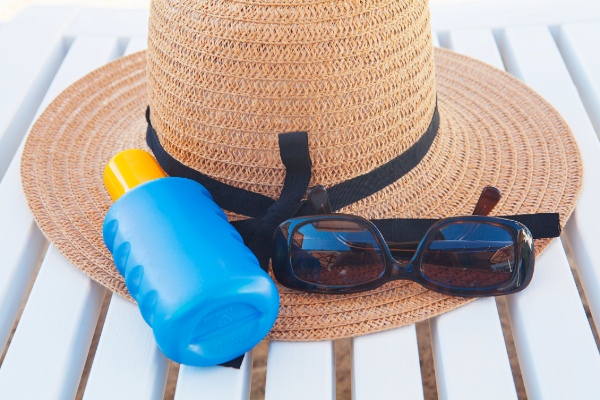
When the UV Index is 3 or above, Cancer Council recommends using a combination of five sun protection measures:
- Slip on sun-protective clothing that covers as much skin as practical.
- Slop on broad-spectrum, water-resistant SPF50 or SPF50+ sunscreen. Apply it 20 minutes before heading outdoors and reapply every two hours, or more often after swimming, sweating or towel-drying.
- Slap on a broad-brimmed or bucket-style hat that protects your face, head, neck and ears.
- Seek shade, particularly when UV levels are high.
- Slide on sunglasses that meet Australian Standards to help protect your eyes from UV radiation.
Sunscreen is an important part of sun protection, but it shouldn't be used to extend the amount of time you spend in the sun.
Keep an eye on your skin
Getting to know your skin can help you notice changes. Keep an eye out for new or changing spots, freckles or moles, including changes in their size, shape or colour.
If you notice something unusual or a spot that is changing, see your GP or another qualified health professional for advice. There isn't a routine, population-wide skin cancer screening program in Australia, so being familiar with your own skin is particularly useful.
Taking a few simple precautions can help protect your skin from unnecessary UV exposure. Whether you're gardening, walking the dog, heading to the beach or enjoying a cuppa in the backyard, remember to slip, slop, slap, seek and slide.
For more information, visit Cancer Council WA's skin cancer information.
Source: Cancer Council Australia and Cancer Council WA.