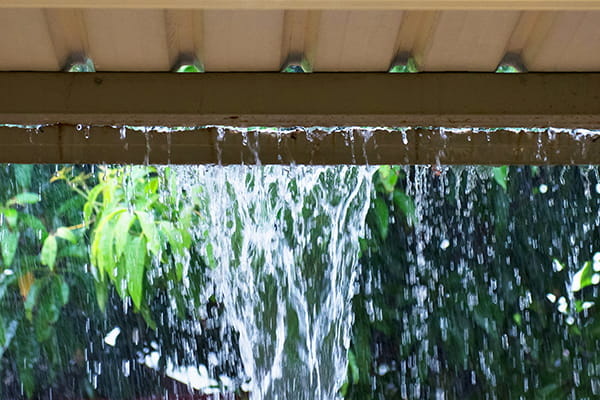
Here are some of the most common reasons gutters develop leaks.
Cracks and holes
Gutters can develop cracks or small holes as they age. Corrosion, physical damage, repeated movement and general wear can all contribute to deterioration. Joints, corners, stop ends and other connection points can be particularly vulnerable.
Poorly installed or deteriorating joints
Gutter sections need to be properly aligned and securely joined to create a watertight connection. If a joint wasn't installed correctly in the first place, or the materials and sealant have deteriorated over time, water can eventually find its way through.
Loose brackets and fixings
Gutters are secured to the building with brackets and other fixings. Over time, these can become loose or deteriorate, causing sections of guttering to sag or move out of position.
Gutter materials and corrosion
Guttering is available in a range of materials, including galvanised steel, COLORBOND® steel, aluminium and PVC. Their durability can vary depending on the material, its protective coating, the local environment, installation and maintenance. Older or damaged galvanised steel, for example, can be susceptible to rust and corrosion.
Leaves and other debris
A build-up of leaves, dirt and other debris can prevent water from flowing freely through the gutter. Debris can also hold moisture against some gutter materials, contributing to corrosion and deterioration over time. Regular cleaning can help keep water moving and make it easier to spot damage.
Incorrect fall or sagging
Gutters are installed with a slight fall so rainwater flows towards the downpipe rather than sitting in the gutter. If a section has sagged, been damaged or doesn't have the correct fall, water may collect instead of draining away properly. Persistent pooling can contribute to deterioration and increase the risk of leaks.
Expansion and contraction
Gutter materials naturally expand and contract as temperatures change. Over many years, repeated movement can place stress on joints, particularly if the guttering or connections are already showing signs of deterioration.
Deteriorated sealant
Many gutter joints use sealant as part of the watertight connection. Sealants don't last forever, and exposure to sunlight, rain and changing temperatures can cause some products to deteriorate over time. Cracked, shrunken or failing sealant can leave small gaps where water can escape.
Blocked downpipes
Not every guttering problem is caused by a leak in the gutter itself. If a downpipe is blocked with leaves or other debris, rainwater can't drain away properly. The water can back up and overflow from the gutter, particularly during heavy rain.
Spotting the signs
A leaking or overflowing gutter isn't always obvious, unless you're keen to stand outside in the rain and inspect it. Instead, keep an eye out for signs such as:
- Soil that's been washed away or eroded beneath a section of gutter or downpipe
- Rust or corrosion stains around the guttering
- Water marks, peeling paint or damp patches near the roofline
- Sections of gutter that appear to sag or pull away from the fascia
- Water overflowing from the gutter during or after rain
- Unusually wet or lush patches of garden beneath a gutter or downpipe
Regularly clearing debris and taking a quick look at your gutters can help you catch small problems before they become more expensive repairs. If you notice persistent leaking, overflowing, sagging or visible damage, it's worth calling a local metal roofing and guttering professional to assess the problem.